People asking the difference between personality and character usually have a specific situation in mind: someone they find difficult but trust completely, or someone charming they would not rely on. The distinction exists precisely to make sense of that gap.
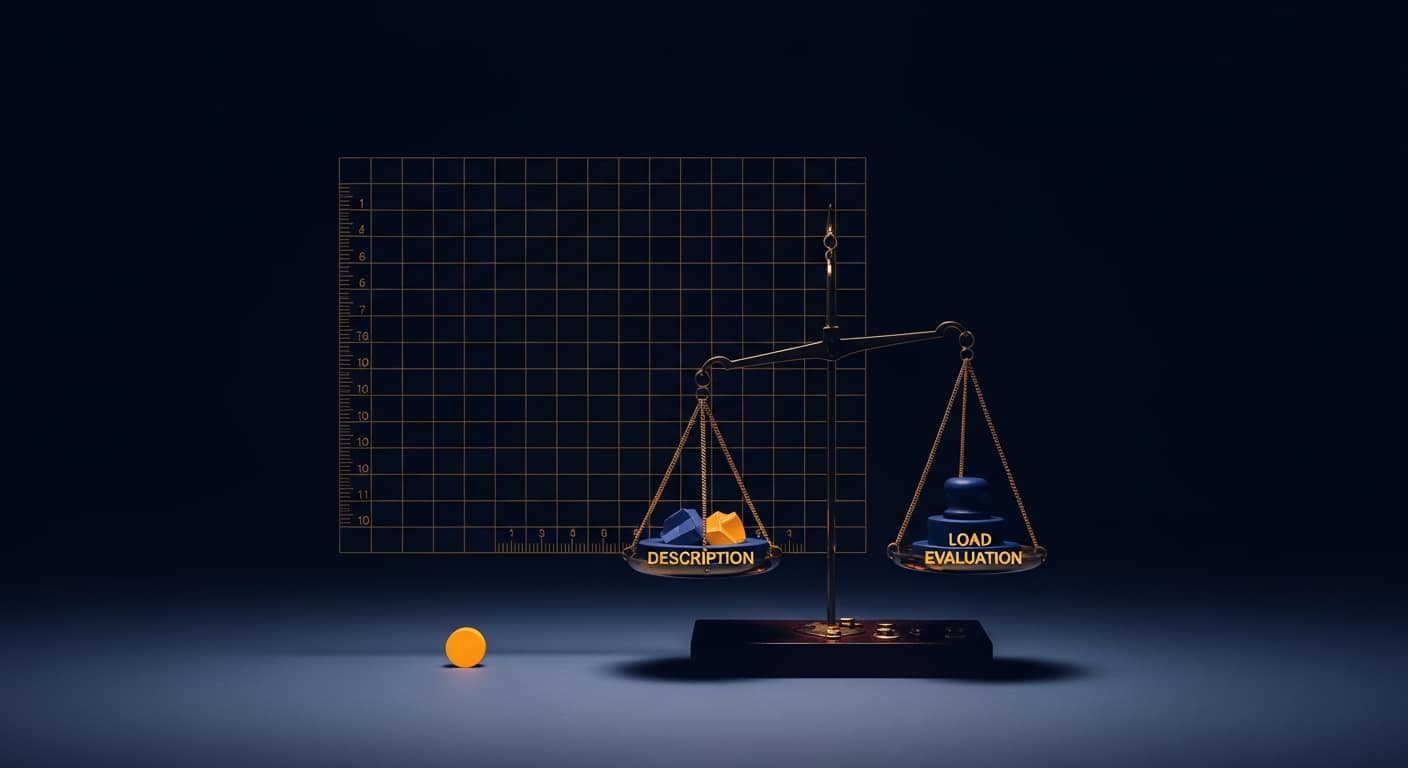
Personality is how you tend to think, feel, and act. Character is the moral dimension of how you act, the part of behaviour that gets judged as virtue or its absence. One describes patterns without praising or condemning them; the other evaluates whether those patterns are expressed well. They overlap at the edges but answer fundamentally different questions: what you are like, versus whether how you act is good.
Key Takeaways
- Personality is descriptive: typical patterns of thought, feeling, and behaviour, morally neutral.
- Character is evaluative: the moral quality of how behaviour is expressed, honesty, courage, integrity.
- The same personality can be expressed with strong or weak character.
- Personality is roughly half heritable; character is more shaped by values, practice, and culture.
- Likeable is a personality judgement; trustworthy is a character one, and they do not always coincide.
- Character is generally considered more changeable than core temperament.
What is personality, precisely?
In modern psychology, personality refers to relatively stable individual differences in how people characteristically think, feel, and behave. The dominant framework describes these as trait dimensions, derived empirically from how people actually describe one another and refined through decades of research (McCrae & Costa, 1987). Crucially, traits are described without moral loading. Being highly extraverted is not better or worse than being introverted; it is simply a different position on a dimension.
This moral neutrality is a feature, not a gap. It lets the model describe people accurately without smuggling in judgement, which is what makes it useful for self-understanding rather than self-criticism. The full set of dimensions is laid out in the 13 dimensions of personality and big five personality traits.
The neutrality is also what people most often violate without noticing. Everyday language is saturated with personality descriptions that have quietly absorbed a moral charge: "cold" for low warmth, "needy" for high attachment activation, "uptight" for high conscientiousness, "full of himself" for high assertiveness. Each of these takes a position on a dimension and adds a verdict, and the verdict usually says more about the speaker's preferences than about the described person's character. A large part of using the personality lens well is stripping the verdict back out, hearing "cold" and asking what trait is actually being observed before deciding whether anything blameworthy is present at all. Often nothing is; the speaker simply prefers a different point on the dimension.
This is not a pedantic distinction. Whole relationships are organised around a moralised reading of what is actually a trait difference, one partner experiencing the other's lower need for contact as a failure of devotion rather than a position on a dimension, and responding to it as a wrong to be corrected rather than a difference to be worked with. The descriptive lens does not resolve such differences, but it changes what they are taken to be, which changes what can be done about them.
What is character, precisely?
Character refers to the moral dimension of a person: the qualities by which their behaviour is judged as admirable or not, honesty, courage, fairness, reliability, restraint. Where personality asks "what is this person like," character asks "can this person be counted on to act well, especially when acting well is costly." The vocabulary of character is unavoidably evaluative; calling someone honest or cowardly is a judgement in a way that calling them introverted is not.
The modern study of character draws on a very old idea, traceable to Aristotle and revived in contemporary work on virtues (Peterson & Seligman, 2004): that character is built through repeated action and habituation rather than merely possessed. You become honest by acting honestly enough times that it stops requiring a decision. This is structurally different from temperament, which you largely start with. How this connects to strengths people can deliberately cultivate is explored in character strengths.
There is a further feature of character that personality lacks: it is most visible precisely when it is costly. Anyone is honest when honesty is free and brave when nothing is at stake. Character is the part of behaviour that shows up under pressure, when the easy option and the right option diverge and no one is watching. This is why character is so much harder to assess quickly than personality. You can read someone's extraversion in an hour; you often cannot read their integrity until you have seen them under a cost they did not choose. The everyday consequence is that first impressions are reasonably informative about personality and almost uninformative about character, which is the reverse of how people tend to weight them.
How are they different in practice?
The distinction becomes concrete when you separate the two judgements that everyday language usually fuses.
| Personality | Character | |
|---|---|---|
| Question it answers | What are you like? | Is how you act good? |
| Type of statement | Descriptive | Evaluative |
| Moral loading | None | Central |
| Main origin | ~50% heritable temperament | Values, practice, culture |
| Changeability | Slow, gradual | More responsive to choice |
| Everyday word | Likeable, easy, intense | Trustworthy, principled, decent |
The single most useful application is recognising that "likeable" and "trustworthy" are different axes. A great deal of poor judgement about people, in hiring, in dating, in friendship, comes from reading charm (a personality matter) as evidence of integrity (a character matter). The two are not correlated strongly enough to substitute one for the other, which is why the distinction is practically, not just philosophically, important. This is part of why surface impressions mislead, examined in how do personality tests help you.
The error runs in both directions and the second direction is the more costly one. Reading charm as integrity is how people get taken in by the plausible; reading abrasiveness as bad character is how they discard the reliable. The blunt colleague who tells you the inconvenient truth, the disagreeable friend who keeps the promise no one is checking, the awkward person who does not perform warmth but never lets you down, these are character signals wearing unappealing personality clothes, and a judgement system tuned to likeability throws them away. Over a career or a life, the cost of mistaking pleasantness for trustworthiness, in both directions, is among the larger compounding errors people make about other people.
There is a self-knowledge version of this too. People routinely judge their own worth on the personality axis, likeable, easy, impressive, while underweighting the character axis, honest, reliable, fair, where the more durable basis for self-respect actually sits. Someone can be socially anxious and awkward, personality, and scrupulously trustworthy, character, and spend years feeling deficient because they are scoring themselves on the wrong axis. Separating the two is not only a tool for reading others; it is a more accurate basis for reading yourself.
When does each label fit the situation?
Reach for the personality lens when the question is about fit, style, and prediction of typical behaviour: how someone will tend to communicate, what environments suit them, how they are likely to respond to stress. These are descriptive questions, and answering them with moral language only distorts them. Calling a reserved colleague "cold" imports a character judgement into what is actually a personality observation.
Reach for the character lens when the question is about trust under cost: will this person tell the truth when a lie is easier, keep a commitment when it becomes inconvenient, act fairly when no one is checking. Personality data is largely silent on these; a highly agreeable person is not thereby honest, and a disagreeable person is not thereby dishonest. Using personality to infer character is one of the more common and consequential reasoning errors, and keeping the two questions separate is most of avoiding it. The risk of conflating description with verdict is also discussed in are personality tests scientific.
A practical heuristic: when you catch yourself making a confident judgement about someone you have known briefly, ask which axis it is on. Confident personality reads after short exposure are often fair, traits do show quickly. Confident character reads after short exposure are usually premature, because character is the part that only reveals itself under a cost the person did not choose and you have not yet seen. The discipline is not to suspend judgement entirely but to know which judgement the available evidence can actually support, and to hold the character verdict open longer than the personality one.
What about the overlap zone?
There is a genuine overlap, and pretending it is cleaner than it is would be its own error. Some traits sit close to the moral boundary, honesty-related tendencies, in particular, function partly as a personality dimension and partly as a character one. A person low on honesty-related traits is being described, but the description shades quickly into evaluation. The boundary is real but not razor-sharp.
There is also a developmental relationship between them. Temperament supplies the raw material that character then works with: a naturally cautious person and a naturally bold one will build the virtue of courage from different starting points and along different routes, but both can build it. Personality sets the terrain; character is partly what you do with the terrain. This is why "that is just my personality" is a weak defence for a character failure. Personality can explain why a particular virtue is harder for you to practise; it does not, on its own, excuse not practising it, because the practice is the part that is yours. A short-tempered person is not thereby exempt from fairness; they have a steeper route to it than a placid person, which is a statement about difficulty, not about obligation. Keeping the descriptive and the evaluative separate is what makes that sentence coherent rather than contradictory. The honest summary is that personality and character are distinct questions that intersect at a few points and influence each other over time, not two sealed categories and not synonyms. Keeping them distinct without pretending they are unrelated is the accurate position. The trait foundations are mapped in conscientiousness and personality.
The difference is best held as two questions rather than two boxes: what someone is like, and whether how they act is good. Confusing them produces predictable mistakes, trusting the charming, dismissing the abrasive. Keeping them separate is one of the quietly most useful distinctions in understanding people, including yourself.
Take the InnerPersona assessment — get a clear, non-judgemental read on what you are like, the descriptive layer, so the evaluative questions can be asked with better information.
Read next: The 13 dimensions of personality
Go deeper
Measure your own personality across 13 dimensions.
The InnerPersona assessment covers all 13 dimensions discussed in this article — free insights, no account required.
Frequently asked questions
What is the difference between personality and character?
Personality describes your typical patterns of thinking, feeling, and behaving, with no moral judgement attached. Character refers to the moral dimension of behaviour, the qualities others praise or criticise, such as honesty, courage, or integrity. Personality is largely descriptive; character is largely evaluative. The same personality can be expressed with strong or weak character.
Is character part of personality?
In most modern frameworks, character is best understood as a moral evaluation of how personality is expressed, rather than a separate faculty. Some traits, such as honesty-related tendencies, sit at the overlap. But the words answer different questions: one asks what you are like, the other asks whether how you act is good.
Can someone have a difficult personality but strong character?
Yes, and this is one of the most useful implications of the distinction. A person can be irritable, blunt, or socially awkward, all personality descriptions, while being scrupulously honest and reliable, character descriptions. Likeable is a personality matter; trustworthy is a character one, and they do not always travel together.
Is character genetic like personality?
Personality traits are roughly half heritable. Character, being the moral expression of behaviour, is more strongly shaped by values, culture, modelling, and deliberate practice. Temperament influences the raw material, but character is the part most responsive to choice and cultivation over time.
Which matters more, personality or character?
They answer different questions, so ranking them is usually a category error. Personality predicts fit, style, and how someone tends to operate; character predicts whether they can be trusted to act well when it costs them. For most relationships and decisions, both are relevant and neither substitutes for the other.
Can you change your character?
Character is generally considered more changeable than core temperament because it is closely tied to repeated choices and values rather than to heritable disposition. Sustained practice of honest, courageous, or reliable behaviour tends to strengthen character over time, in line with a very old idea that virtue is built by habituation.